
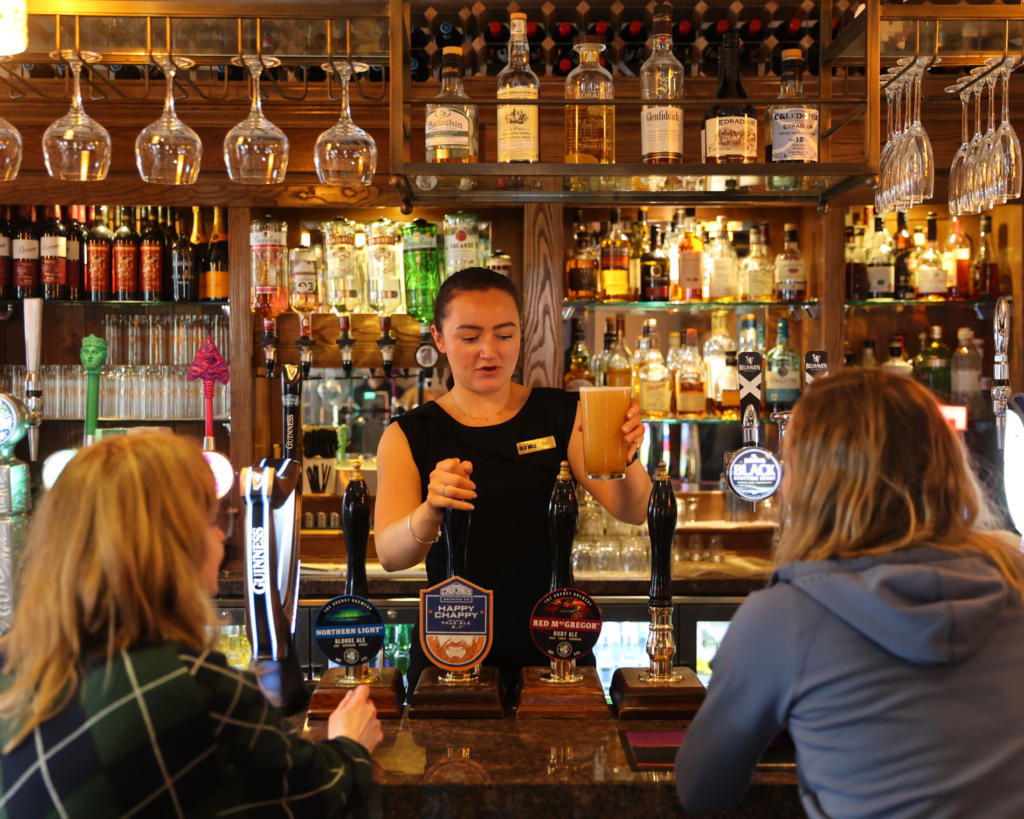
One in five hospitality businesses fear collapse in the next 12 months, according to an industry-wide survey that comes days before rises in tax and employment costs kick in.
From Wednesday, many pub, restaurant and hotel companies face the prospect of a higher bill for business rates paid to their local authority, while an increase in minimum wage thresholds takes effect on the same day.
The impending cost crunch has left the sector facing a crisis in confidence and warning of multiple business failures unless the burden is “dramatically reduced”.
One in five of the survey respondents, who between them operate more than 20,000 venues, said their businesses were at risk of failing in the next 12 months.
Almost half (44%) were pessimistic, while 17% were operating at a loss and 2% believed their businesses were already unviable, according to data shared with the Guardian by sector analysts CGA by NIQ.
The mood is likely to have worsened since the survey was performed in February, after turmoil in the energy markets following the attacks on Iran by the US and Israel.
Surging oil and gas costs are likely to send energy bills soaring for businesses that aren’t on fixed-term contracts. The cost of ingredients, not to mention the extra strain on consumers’ wallets, presents further danger on top of the policy changes.
But the industry’s immediate focus is on the policy changes that come into effect on 1 April.
Survey respondents put increased employment costs at the top of their list of worries, followed by business rates and inflation in the cost of food and drink.
UKHospitality, which commissioned the survey alongside trade bodies from the pubs sector, said the increase in the national living wage and national minimum wage would result in an extra £1.4bn in costs for the sector.
The organisation said it could not provide an estimate of the overall cost of business rates changes, but it expected most of its members would pay more.
It believed the average hotel in England would pay £28,900 more this year (up 30%), while the average restaurant would face a 15% increase worth £1,800.
Both the wage and business rates increases are the result of measures announced in the chancellor Rachel Reeves’s budget in November.
After a backlash, relief schemes have been put in place to cap the level of increases, while pubs will get a 15% discount and a two-year freeze.
“Our local pubs, restaurants and hotels are finding it more and more difficult to make ends meet, and even more cost increases arriving this week will make that challenge even harder,” said UKHospitality, in a joint statement with the British Beer and Pub Association, the British Institute of Innkeeping and Hospitality Ulster.
“Too many businesses are simply not making any money, and it’s because the sector’s cost burden is so high. The only result is lost jobs and business closures, which ultimately hurts communities and high streets.
“The business rates support for pubs was essential and welcome, but there are many policies undermining government’s objectives to grow the economy and get more people back into work.
“Hospitality can be a driving force of growth and jobs, but only if its costs of doing business are dramatically reduced. The sector wants to work with government to achieve that.”
An incredible self-own
In 1936, John Scott, son of the late Guardian owner and legendary editor CP Scott, did something unheard of for a media heir: he gave up his stake for the greater good.
After inheriting the newspaper, Scott renounced all financial benefit – bar his salary – in the Guardian (worth £1m at the time and around £62m today) and passed ownership over to the newly formed Scott Trust. The Trust would evolve to have one key mission: to secure the financial and editorial independence of the Guardian in perpetuity.
That means the Guardian can’t be bought. Not by private equity, not by a conglomerate, and definitely not by a billionaire looking for a political mouthpiece. So here are three good reasons to make the choice to support us today.
1. Our quality, investigative journalism is a scrutinising force at a time when the rich and powerful are getting away with more and more.
2. We are independent and have no billionaire owner controlling what we do, so your money directly powers our reporting.
3. It doesn’t cost much, and takes less time than it took to read this message.
This unique model also means we depend on readers like you from Nigeria to help fund our work. Our independence means we can say what we want, report on who we want, challenge who we want, and stand up at a time when others are sitting down. If you would rather the news you read was the result of decisions made by journalists and editors, not shareholders or ultra-wealthy tech bros, then, well, you know what to do: Support the Guardian on a monthly basis.